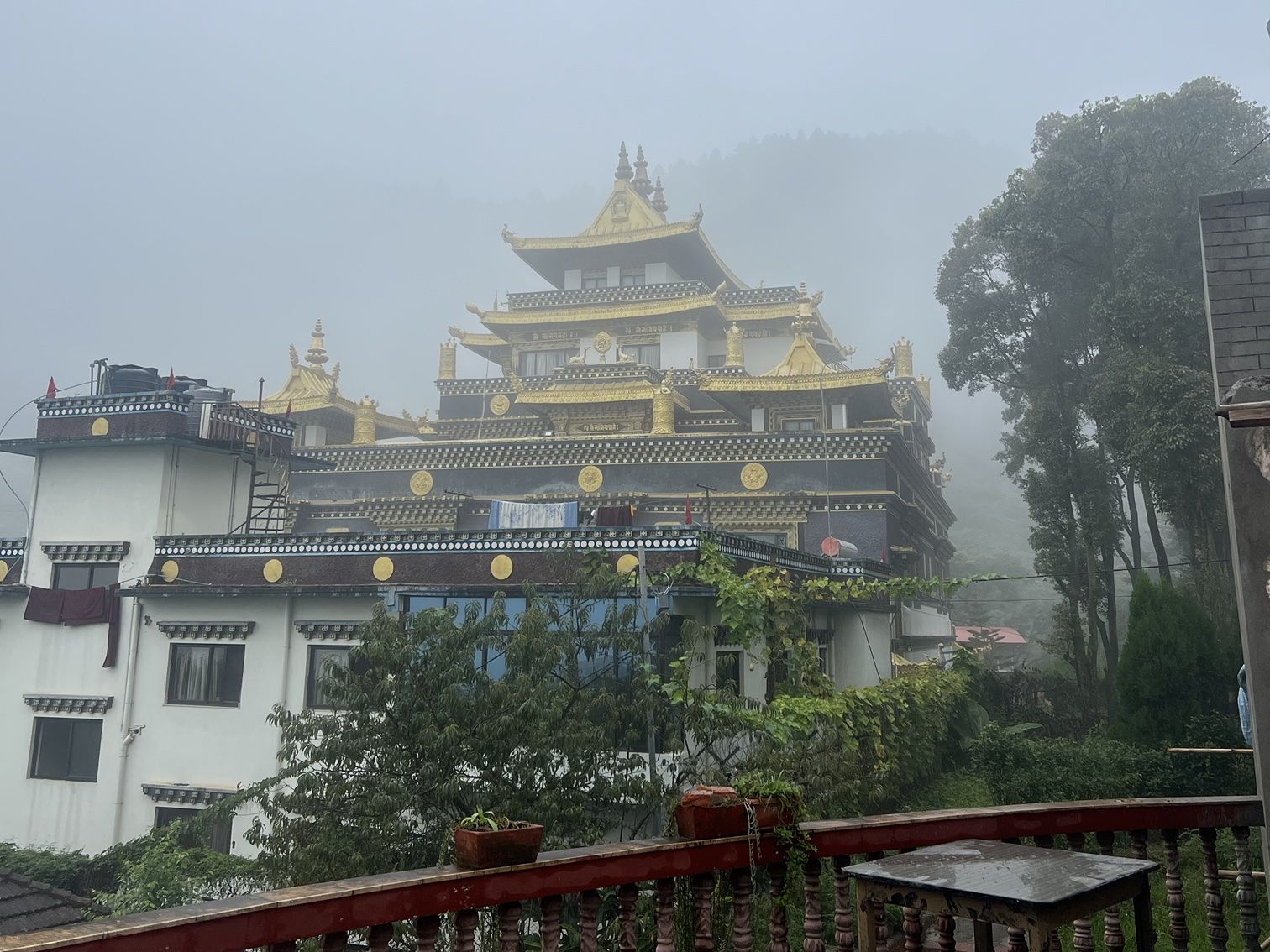
Most visitors see Pharping in a hurried half-day from Kathmandu. Stay a night in Dollu and you can walk to six places of practice before lunch. This is our short guide to doing that well.
- Distance
- Everything is within 20 minutes of our gate on foot.
- Time
- One unhurried morning. Longer if you sit in the caves.
- Path
- Village lanes and steps. The last stretch to Mandarava Cave is a short uphill hike.
- Best time
- Early morning, while it is cool and quiet.
Walking times
Times are from our gate, at an easy pace, not from one stop to the next. Ask us before you set out and we'll sketch the easiest loop for the day.
- Mahaguru Monastery1 min
- Azom Monastery7 min
- Rigon Tashi Choeling Monastery9 min
- Samye Memorial Nunnery13 min
- Yeshe Tsogyal Cave13 min
- Mandarava CaveShort uphill hike at the end20 min
The monasteries
Each monastery has its own community and its own daily rhythm. Visitors are usually welcome in the courtyards. Shrine rooms are sometimes closed outside prayer times; if a door is shut, ask a monk or nun, or come back later.
Mahaguru Monastery 1 min
Our nearest neighbour, close enough for a visit before breakfast and easy to come back to at the end of the day.
Azom Monastery 7 min
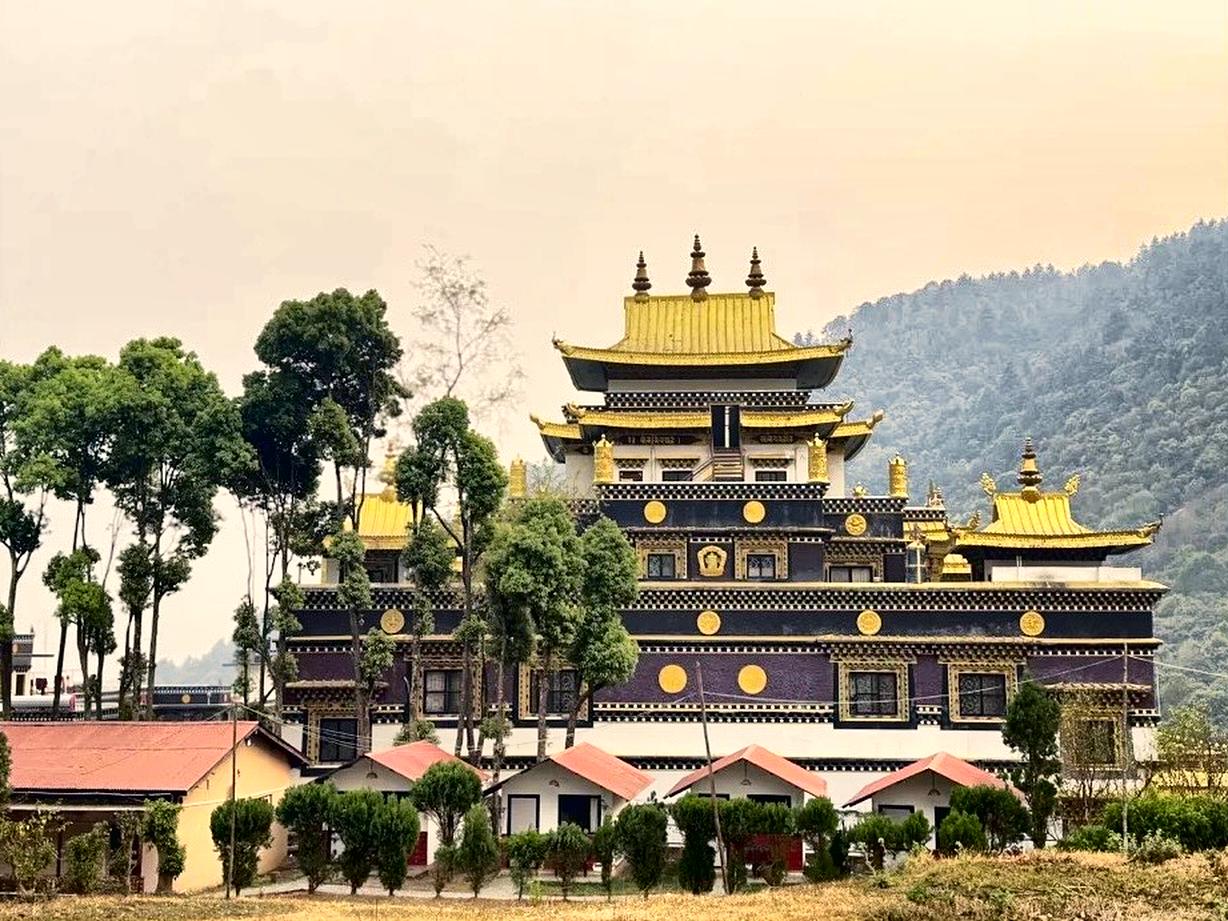
Also spelled Adzom. It sits on the hillside above Dollu and looks out over the valley.
Rigon Tashi Choeling Monastery 9 min
Founded by the Tibetan teacher Namkha Drimed Rabjam Rinpoche and opened in 2005.
Samye Memorial Nunnery 13 min
A community of nuns. Visit with the same quiet as the monasteries, and dress modestly.
The two caves
Yeshe Tsogyal and Mandarava were Guru Rinpoche's two great women disciples, and in Tibetan tradition both are honoured as realised teachers in their own right. Mandarava was a princess from northern India. Yeshe Tsogyal came from Tibet and is remembered for recording and hiding much of his teaching for later generations. Caves named after them are found across the Himalaya, and two of them are on our hillside.
Yeshe Tsogyal Cave 13 min
The nearer of the two, and an easy walk. A cave is a place of practice rather than a sight: if someone is meditating inside, wait quietly or come back later.
Mandarava Cave 20 min
The path ends with a short uphill hike. Wear shoes with a good grip, especially after rain, and bring water.
How to visit
You don't need to be Buddhist to visit, and nobody expects you to know the customs. A few simple habits go a long way.
- Walk clockwise around stupas, temples and prayer wheels, and turn prayer wheels clockwise too.
- Take off your shoes and hat before you enter a shrine room.
- Cover your shoulders and knees.
- Keep your voice low and your phone on silent.
- Ask before you photograph people, and check whether photos are allowed inside. Many shrine rooms don't allow them.
- Don't touch statues, offerings or ritual objects, and don't point your feet at the altar when you sit.
- If prayers are under way, it's usually fine to sit quietly at the back and leave quietly when you're ready.
- A small offering in the donation box is customary, never required.
What to bring
- Shoes that slip on and off easily and still grip on steps
- A light layer: mornings on the hill can be cool
- Water
- A scarf or shawl to cover your shoulders
- A few small notes for offerings
- A rain jacket from June to September, during the monsoon
Further afield: Pharping
Pharping itself is ten minutes away by car, with more than ten monasteries along its streets and hillsides. Its best-known sites are two caves linked with Guru Rinpoche: Asura Cave above the town, and the Yangleshö cave at Sekh Narayan below it. By tradition, he practised here in the eighth century before travelling on to Tibet.
For the history and stories of these caves, Nekhor's guide to Asura and Yangleshö is a good place to start.
Dakshinkali Temple, the Hindu shrine to the goddess Kali that gives our area its name, is a short drive further on. It is busiest on Tuesday and Saturday mornings.
Ask us about a car or a local guide for the day.